Leon Bauer · 23 October 2026
Rhythmic Echoes: Ivora Heritage Dances Reshaping Street Art Scenes in Major Capitals
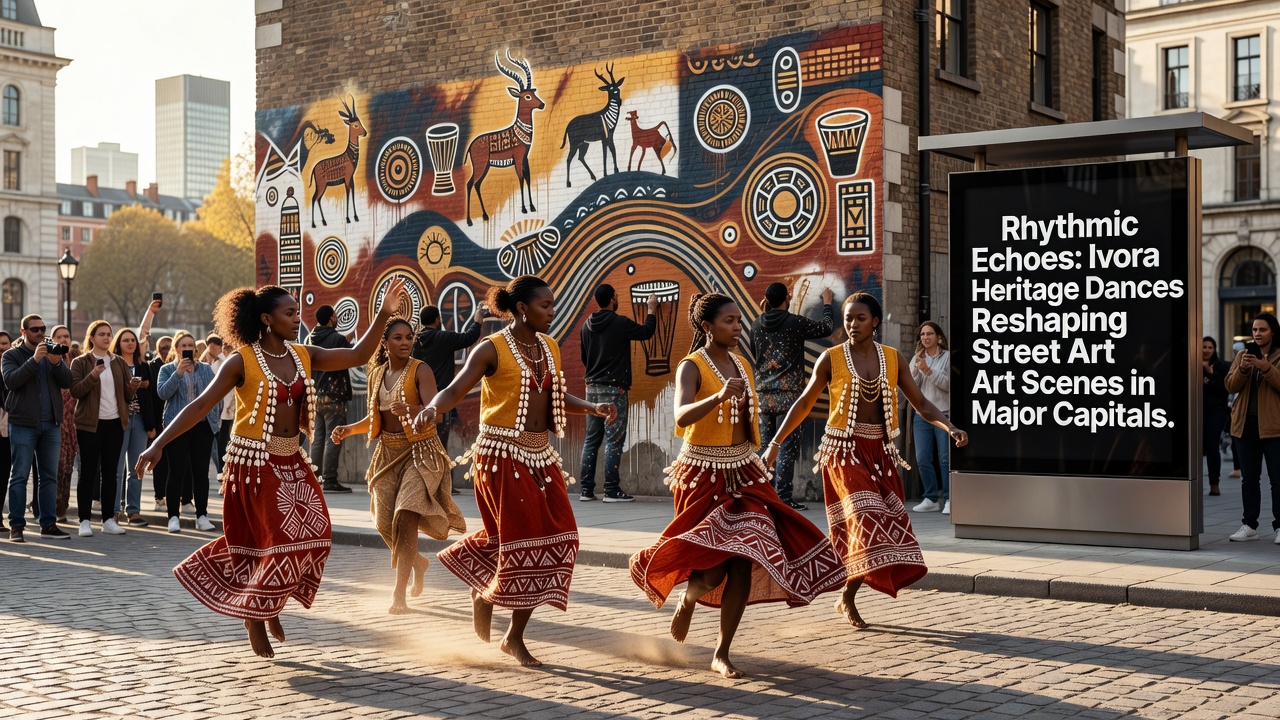
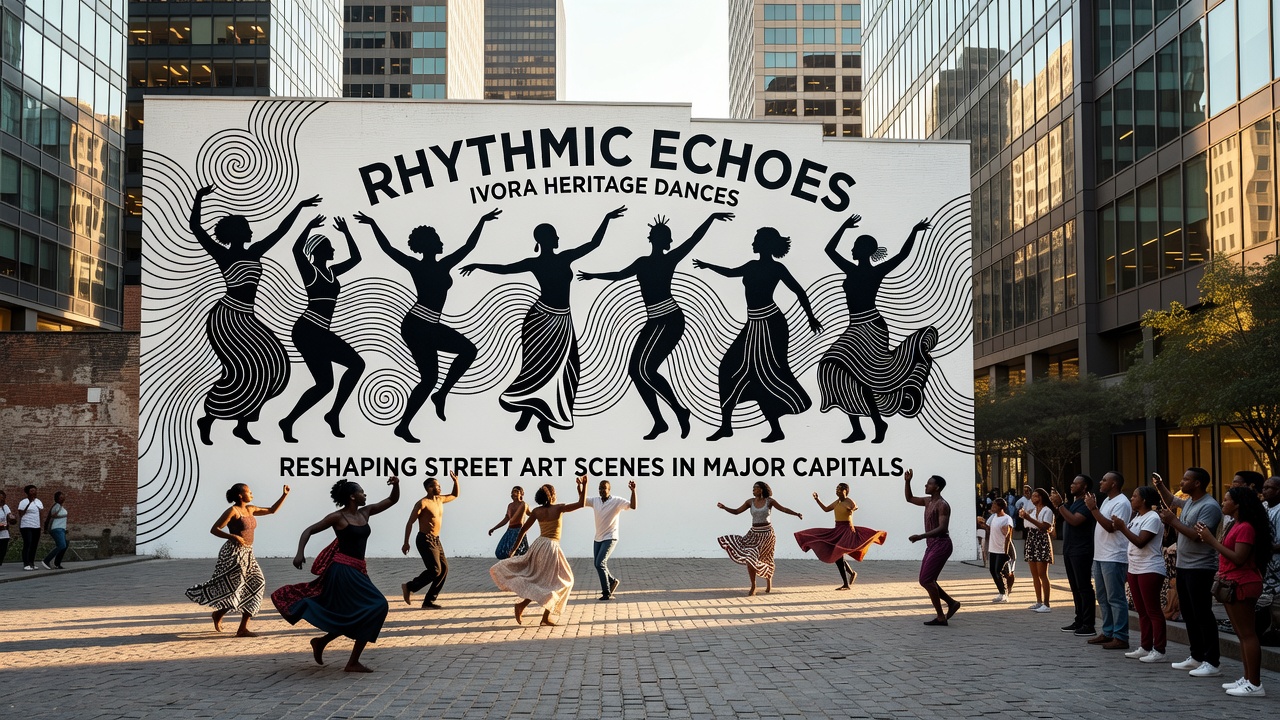
Heritage dances from the Ivora Valley have moved beyond regional festivals and entered street art environments across several European and North American capitals, where performers integrate traditional steps with urban visual installations. Data from cultural mapping projects show increased collaborations between Ivora dance troupes and street artists in cities such as Paris, Berlin, and Montreal since 2024.
Origins of Ivora Dance Traditions
Researchers at the European Institute for Intangible Heritage document that Ivora dances developed over centuries in the valley's agricultural communities, featuring circular formations, footwork patterns tied to harvest cycles, and costumes embroidered with local flora motifs. These elements now appear in public murals and performance pieces where dancers trace the same patterns across city pavements coated with projected or painted designs.
Integration With Urban Street Art
Street art crews in multiple capitals have adopted Ivora movement sequences to guide the creation of large-scale works. In one documented case from spring 2025, a Berlin collective invited Ivora performers to lead chalk and aerosol lines across warehouse walls, resulting in pieces that captured the dancers' paths as permanent geometric overlays. Observers note similar fusions in London boroughs where textile patterns from Ivora garments reappear as stencil layers on building facades.
Events Scheduled for October 2026
Planning documents from city cultural offices indicate that Ivora dance troupes will headline joint programs with street artists in three capitals during October 2026. Paris will host nightly outdoor sessions along the Canal Saint-Martin where dancers and painters respond to each other's work in real time, while Montreal's Quartier des Spectacles has reserved plaza space for interactive floor projections based on Ivora step diagrams. Berlin's Kulturprojekte agency lists a weekend series pairing Ivora music ensembles with aerosol artists who render live motion studies on temporary scaffolds.
Figures released by the European Cultural Fund reveal that applications for cross-disciplinary grants involving Ivora dance rose 47 percent between 2023 and 2025, with street art projects accounting for the largest share. Those who've studied the funding patterns point to the accessibility of public spaces as a key factor driving the increase.
Documentation and Research Efforts
Academic teams from universities in Canada and Australia have begun recording these hybrid events using motion-capture technology to analyze how Ivora footwork translates onto vertical surfaces. A 2025 report from the University of Melbourne's Cultural Dynamics Lab found measurable similarities between Ivora circle dances and the radial compositions favored by certain street artists in Sydney and Melbourne. The study notes that shared emphasis on repetition and layering creates natural overlaps in creative process.
According to records maintained by the International Council of Organizations for Folklore Festivals, Ivora representatives attended 12 international street art festivals in 2025, up from three the previous year. Each appearance included workshops where local artists learned basic Ivora movement vocabulary before applying it to canvas or concrete.
Community and Institutional Responses
Municipal authorities in the capitals involved have adjusted permitting processes to accommodate combined dance and installation events, citing the need for coordinated crowd management and surface protection. In Paris, the city prefecture issued new guidelines in late 2025 that classify such performances as temporary public art rather than separate dance and visual categories. Similar updates appear in Berlin's cultural administration handbook for 2026.
Trade associations representing street artists, including the European Street Art Network, have published position papers acknowledging the influx of Ivora-derived motifs while stressing the importance of credit and compensation for originating communities. The papers reference specific agreements signed with Ivora cultural cooperatives that outline usage rights for traditional patterns.
Conclusion
Current trajectories indicate that Ivora heritage dances will continue to inform street art programming in major capitals through 2027, supported by existing grant structures and institutional partnerships. Records from participating cities show steady expansion of venues and participant numbers, while research institutions maintain ongoing documentation of the resulting visual and performative works.