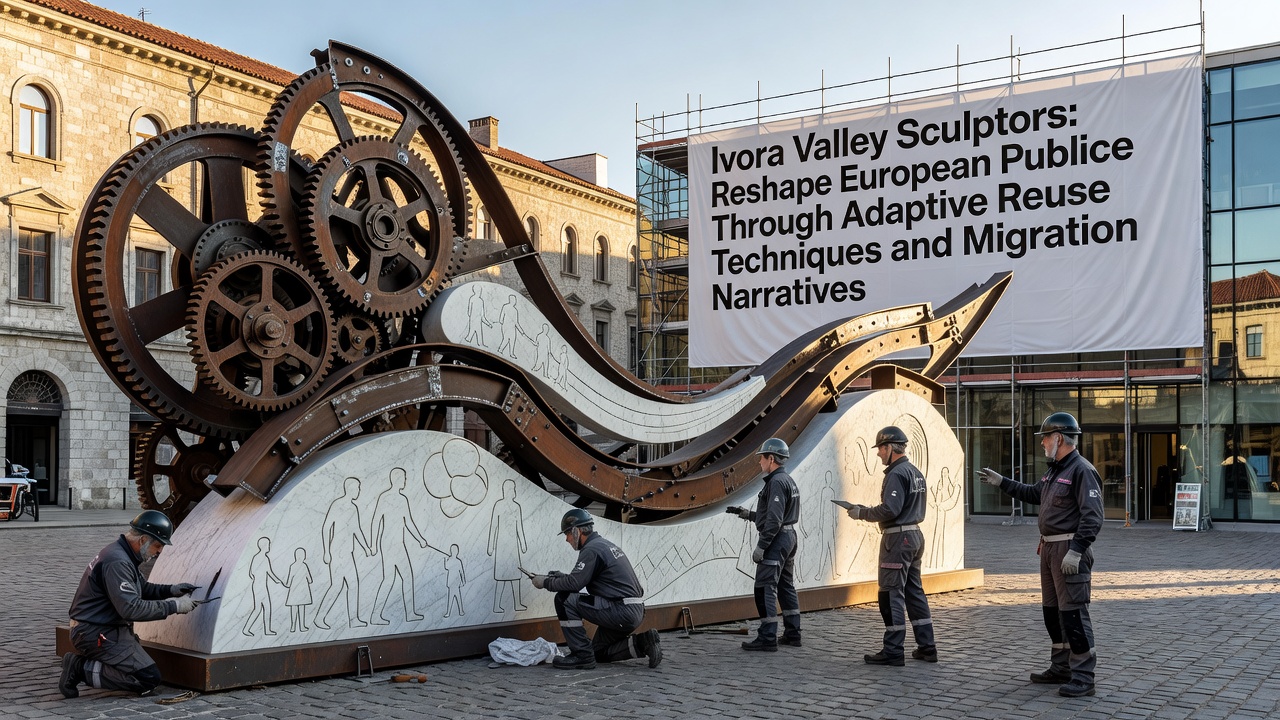
Felix Keller · 6 November 2026
Ivora Valley Sculptors Redefine European Public Spaces with Adaptive Reuse and Migration Stories
Artists based in Ivora Valley have developed methods that merge adaptive reuse of discarded industrial components with narratives drawn from migration histories, and these practices now appear in public installations across several European cities. Teams collect materials such as decommissioned railway tracks, factory piping, and shipping containers, then reshape them into sculptural forms that reference journeys across borders. Data from regional cultural inventories show that at least twelve such projects received municipal permits between 2023 and 2025, with additional commissions confirmed for late 2026.
Core Techniques in Material Transformation
Adaptive reuse begins with on-site assessment of available waste streams, after which sculptors apply cutting, welding, and surface treatment protocols that preserve structural integrity while altering visual language. Researchers at the University of Bologna documented that these methods reduce raw material demand by an average of 68 percent compared with conventional bronze or steel casting. Workshops in Ivora Valley maintain detailed logs that track each component from collection through final placement, and those records feed into open-source databases used by municipal planners elsewhere on the continent.
Migration narratives enter the work through etched text panels, embedded audio loops, and spatial arrangements that echo routes taken by displaced communities. One installation in Rotterdam incorporates fragments of a former ferry terminal alongside recorded interviews gathered from residents who arrived during the 1990s. Similar elements appear in projects planned for Barcelona and Hamburg, where local archives supply primary source material that sculptors integrate without altering factual content.
Expansion Across European Sites
By November 2026, new works are scheduled for unveiling in Lyon and Malmö, each incorporating regionally sourced industrial remnants paired with oral histories collected from migrant support organizations. The European Commission’s Creative Europe program lists these projects among funded initiatives that promote cross-border cultural exchange. Municipal budgets in participating cities allocate portions of public art funds specifically for maintenance protocols that ensure longevity of reused materials under varying climate conditions.
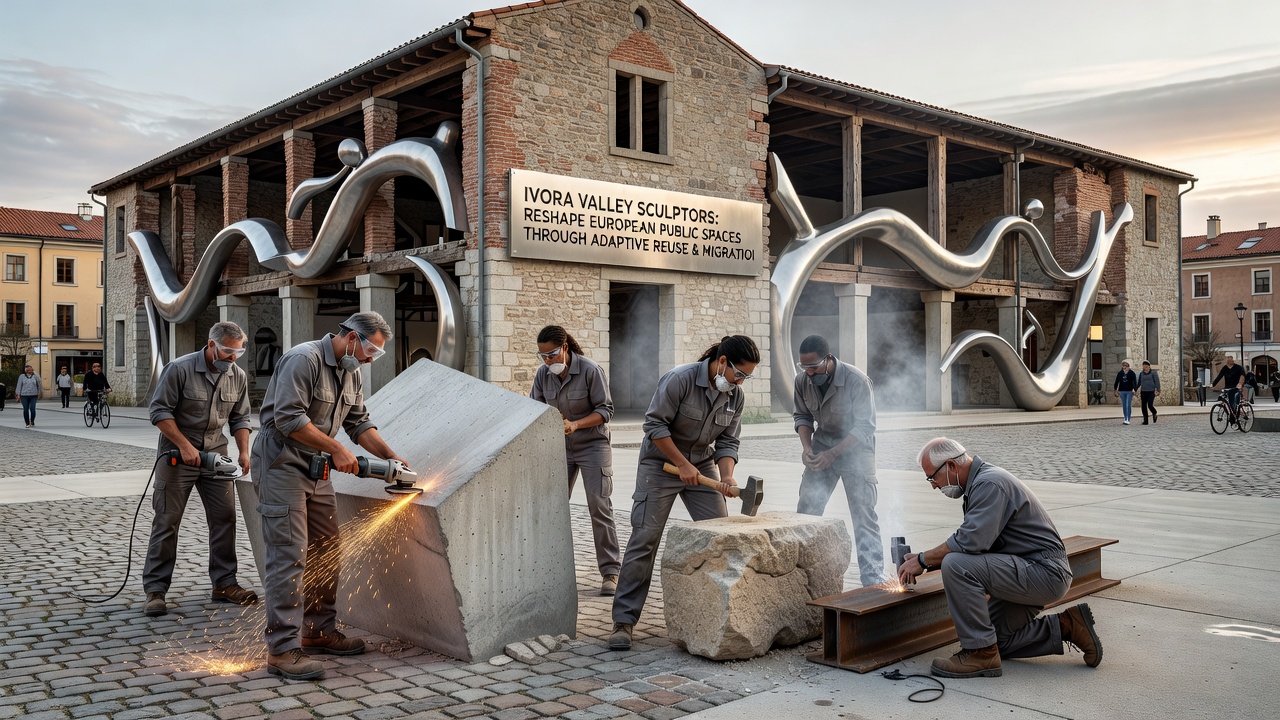
Observers note that the same sculptural vocabulary travels between sites, yet each location adapts details to reflect distinct local histories. In Milan, a 2024 plaza piece used retired tram rails to form archways whose dimensions match those of a 1950s train carriage that carried workers from southern Italy northward. In Vienna, an upcoming 2026 installation will embed maps etched into container walls that chart movements across the Danube corridor. These variations demonstrate how a consistent technical approach accommodates site-specific content without requiring new material extraction.
Documentation and Knowledge Transfer
Academic teams from institutions in Ireland and Canada have conducted parallel studies on the durability of surface treatments applied to reused metals. Their joint findings, published through the Council of Europe heritage portal, indicate that specialized coatings extend service life by fifteen to twenty years under urban pollution loads. Ivora Valley studios host annual workshops where technicians from other regions review these protocols and adapt them to local regulations governing public safety and accessibility.
Databases maintained by participating cities record visitor interactions through anonymized sensors, and preliminary figures reveal that installations combining material reuse with migration content attract higher dwell times than abstract geometric pieces in comparable plazas. Planners use these metrics when allocating space for future commissions, yet they continue to require independent engineering reviews before any structure receives final approval.
Conclusion
Projects originating in Ivora Valley continue to supply both physical components and narrative frameworks that municipalities incorporate into evolving public spaces. Records from cultural agencies indicate sustained interest through 2027, with additional sites under preliminary review in Nordic and Mediterranean regions. The combination of documented material savings, archival integration, and scheduled openings supports ongoing application of these methods across multiple European contexts.